
Welcome to above the clouds

GCP – A smart investment: FINRA builds a culture of improvement with DORA
To protect investors and ensure market integrity, regulatory bodies in the financial sector must operate with exceptional efficiency and foresight. The Financial Industry Regulatory Authority (FINRA), which oversees U.S. brokerage firms, is dedicated to advancing its regulatory capabilities to safeguard capital markets and empower confident investing for all. A key aspect of this mission is […]
AWS – AWS Lambda adds support for .NET 10
AWS Lambda now supports creating serverless applications using .NET 10. Developers can use .NET 10 as both a managed runtime and a container base image, and AWS will automatically apply updates to the managed runtime and base image as they become available. .NET 10 is the latest long-term support release of .NET and is expected […]
AWS – AWS simplifies Client VPN onboarding with Quickstart setup
Today, AWS announces a simplified onboarding experience for AWS Client VPN, introducing a new Quickstart setup method that streamlines the process of creating and configuring Client VPN endpoints. AWS Client VPN allows you to securely connect remote users to AWS resources and on-premises networks. The new Quickstart setup, reduces the number of steps required to […]
AWS – Announcing Apache Airflow 2.11 Support in Amazon Managed Workflows for Apache Airflow
You can now create Apache Airflow version 2.11 environments on Amazon Managed Workflows for Apache Airflow (MWAA). Apache Airflow 2.11 introduces several changes to help you prepare for upgrading to Apache Airflow 3. Amazon MWAA is a managed orchestration service for Apache Airflow that makes it easier to set up and operate end-to-end data pipelines […]
AWS – Amazon EC2 I7ie instances now available in additional AWS regions
AWS is announcing starting today, Amazon EC2 I7ie instances are now available in AWS Asia Pacific (Mumbai), Canada West (Calgary) and Europe (Paris) regions. Designed for large storage I/O intensive workloads, I7ie instances are powered by 5th Gen Intel Xeon Processors with an all-core turbo frequency of 3.2 GHz, offering up to 40% better compute […]
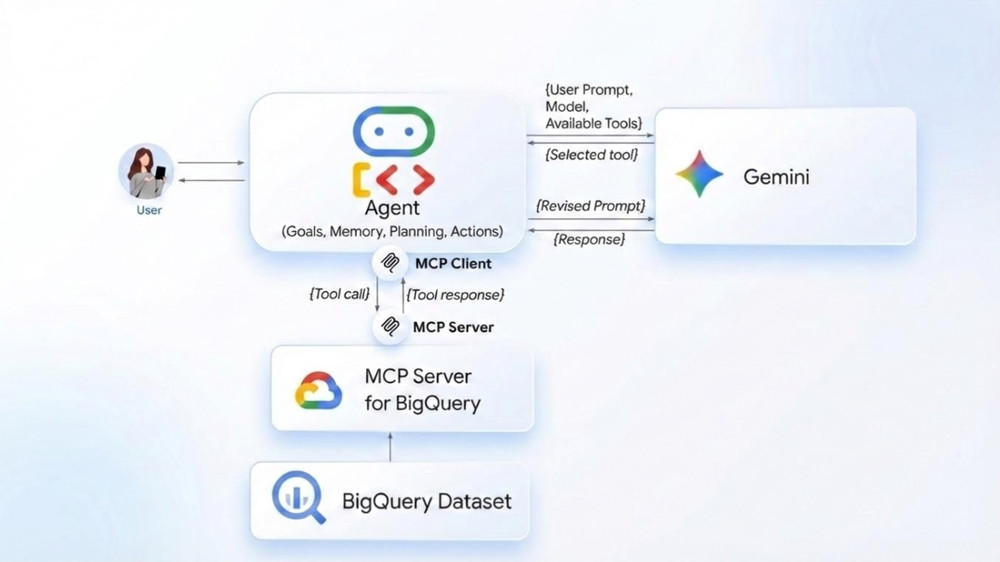
GCP – Build data analytics agents faster with BigQuery’s fully managed, remote MCP server
Connecting AI agents to your enterprise data shouldn’t require complex custom integrations or weeks of development. With the release of fully managed, remote Model Context Protocol (MCP) servers for Google services last month, you can now use BigQuery MCP server to give your AI agents a direct, secure, way to analyze data. This fully managed […]
AWS – Amazon EC2 C8i and C8i-flex instances are now available in additional AWS regions
Starting today, Amazon Elastic Compute Cloud (Amazon EC2) C8i and C8i-flex instances are available in the Asia Pacific (Mumbai), Asia Pacific (Seoul), and Asia Pacific (Tokyo) regions. These instances are powered by custom Intel Xeon 6 processors, available only on AWS, delivering the highest performance and fastest memory bandwidth among comparable Intel processors in the […]
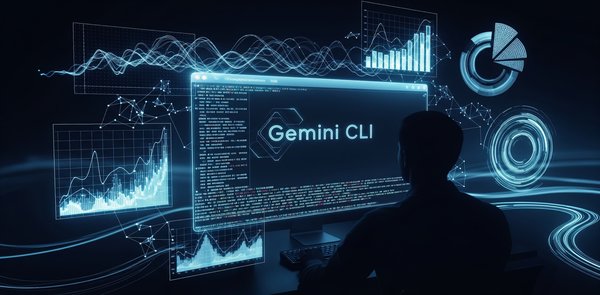
GCP – Instant insights: Gemini CLI’s New Pre-Configured Monitoring Dashboards
Observability is a key component to understand how tools are helping you and your teams. We’re excited to announce a significant set of updates that enhance the Gemini CLI’s telemetry capabilities, making it easier than ever to gain immediate visibility into adoption, interaction patterns, and performance, by leveraging pre-configured Google Cloud Monitoring dashboards. You may […]
AWS – AWS Marketplace Seller Reporting now provides collections visibility
Today, AWS announces collection visibility in AWS Marketplace Seller Reporting, which adds up-to-date payment collection status to the Billed Revenue Dashboard and Billing Event Data Feed. This enhancement enables sellers to distinguish between invoiced, collected, and disbursed amounts, eliminating the visibility gap between invoice creation and disbursement. With this feature, sellers can make informed business […]
AWS – Amazon ECS now supports tmpfs mounts on AWS Fargate and ECS Managed Instances
Amazon Elastic Container Service (Amazon ECS) now supports tmpfs mounts for Linux tasks running on AWS Fargate and Amazon ECS Managed Instances, extending beyond the EC2 launch type. With tmpfs, you can now create memory‑backed file systems for your containerized workloads without writing this data to task storage. tmpfs mounts provide a temporary file system […]